
Christopher Nolan talks narrative decisions, film critics and whether he Christianised The Odyssey
Christopher Nolan interviewed by political philosophy lecturer & doctoral student Zhong Shu in Beijing, China, on 30 July 2026. Source: https://www.bilibili.com/video/BV1vdGK6GEQE
Read Video · Transcription & Insights
Cet épisode a une transcription complète + analyses IA
Compte gratuit · sans carte bancaire · 150 crédits à l'inscription, suffisant pour cet épisode
- 📄 Transcription complète avec horodatage
- ✨ Résumé IA, mots-clés & carte mentale
- 💡 Points clés & citations
- Intervenant 1
- Intervenant 2
- Intervenant 1
- Intervenant 2
- Intervenant 1
Chronologie de l'épisode
Nolan discusses the cyclical nature of civilizations and how his adaptation of The Odyssey reflects a modern sense of decline.
- Nolan notes that Homer wrote about events 400 years earlier, viewing that past as more advanced, which parallels the idea of a civilization at dusk.
- He connects this to the Bronze Age collapse and his previous work on Oppenheimer, which dealt with the end of the world.
- He suggests that the poem subtly contains this cyclical view, and his film carries that sensibility.
Nolan addresses whether he Christianized The Odyssey by introducing the concept of atonement.
- He explains that he focused on the Greek concept of xenia (Zeus's law) as mutual respect, which is central to the story.
- He argues that atonement may be a modern interpretation brought by viewers, not a deliberate Christianization.
- He sees the breaking of xenia as the cause of catastrophe, and atonement as a natural outgrowth of that philosophical idea.
Nolan discusses the role of hubris and whether Odysseus should repent for his pride.
- He questions the practical effect of repentance, noting that the damage is done and the collapse is inevitable.
- He contrasts Christian theology with Greek tragedy, where hubris is irreversible.
- He emphasizes that the emotional catharsis in the final meeting between Odysseus and Penelope is important, but may not change the outcome.
Concepts clés
- Odyssey— Central text being adapted and discussed throughout the episode.
- Zenia— Greek concept of hospitality and mutual respect, key to Nolan's interpretation.
- atonement— Christian concept contrasted with Greek worldview, central to the discussion.
Citations remarquables
I think it's there in the poem, it's subtle, but when you look at the history as well, and you look at the idea that, you know, when they would unearth these walls of old palaces that were crumbled, they called them cyclopian walls because they thought only a giant could have built such grand walls.
🤯— Reveals how ancient Greeks viewed their past as superior, a surprising historical insight that informs Nolan's adaptation.
I don't think I'm completely at odds with the way Homer is telling the story... Homer's writing about an era before his he's writing about an era hundreds of years before that his audience viewed as being more advanced than theirs.
💡— Challenges the assumption that Homer celebrated his own time, showing a cyclical view of civilization that resonates with modern concerns.
Actions à entreprendre
🎬Storytelling & Film
Storytelling mechanisms are valid even when identifiable; understanding how a story works doesn't diminish its impact.
When analyzing a film or book, note the techniques used (e.g., flashbacks, music) and reflect on how they shape your emotional response, rather than dismissing them as manipulative.
Filmmakers must balance innovation with audience expectations, using familiar structures to ground unconventional narratives.
If you're a creator, experiment with one unconventional element in your work while keeping the overall structure familiar to your audience, like Nolan did with Memento.
🏛️History & Culture
Ancient civilizations often viewed their past as more advanced, leading to a cyclical view of history that resonates today.
Research a historical period you're interested in and compare how people of that time viewed their own past versus how we view it now.
The concept of hospitality (Zenia) was a divine test in ancient Greece, reflecting a universal ethical principle.
In your daily interactions, practice the golden rule consciously, treating others with respect as if they might be 'gods in disguise'.
La transcription et les insights sont générés par IA et peuvent contenir des erreurs. La précision dépend de la qualité audio et de la clarté des intervenants — en cas de doute, l’audio original fait toujours foi.
Épisodes et vidéos prêts à lire
Épisodes de podcast
INTJ Personality Type Advice - 0088
Personality Hacker Podcast
19 oct. 20151:05:25EN
A journalist's trick for talking to people you can't stand | Joshua Johnson
TED Talks Daily
3 août 20269:31EN
Humanity's First Star Probe, Architect Labs Beats NVIDIA 3.4x, Musk Wants Satellites to Cool Earth | EP #285
Moonshots with Peter Diamandis
2 sept. 20261:57:22EN
FRANCK LOPVET : "Ça me gonfle le bien-être !"
Entre vous et moi - Dominique Lagrou Sempère
8 juin 20261:50:01FR
Sind Deutschland Kinder egal? Mit Caroline von St. Ange
Politik mit Anne Will
22 mai 20262:01:19DE
SÉRIE: RELIGIÃO TÓXICA - A GRAÇA NÃO É O QUE VOCÊ PENSA| PR.YAN AUGUSTO
Minha Igreja Na Cidade
27 juil. 202655:27PT
Vidéos

Marketing Agents Are Too Good Now
Greg Isenberg
27 juil. 202637:48EN
How I use LLMs
Andrej Karpathy
27 févr. 20252:11:12EN
Give Me 11 Minutes and I’ll Solve Your Procrastination
Daniel Pink
30 juin 202511:22EN
Un pays qui s'embrase, une caste qui s'embrasse... Avec Alexis Poulin
Idriss J. Aberkane, Ph.D x3
18 août 20262:12:55FR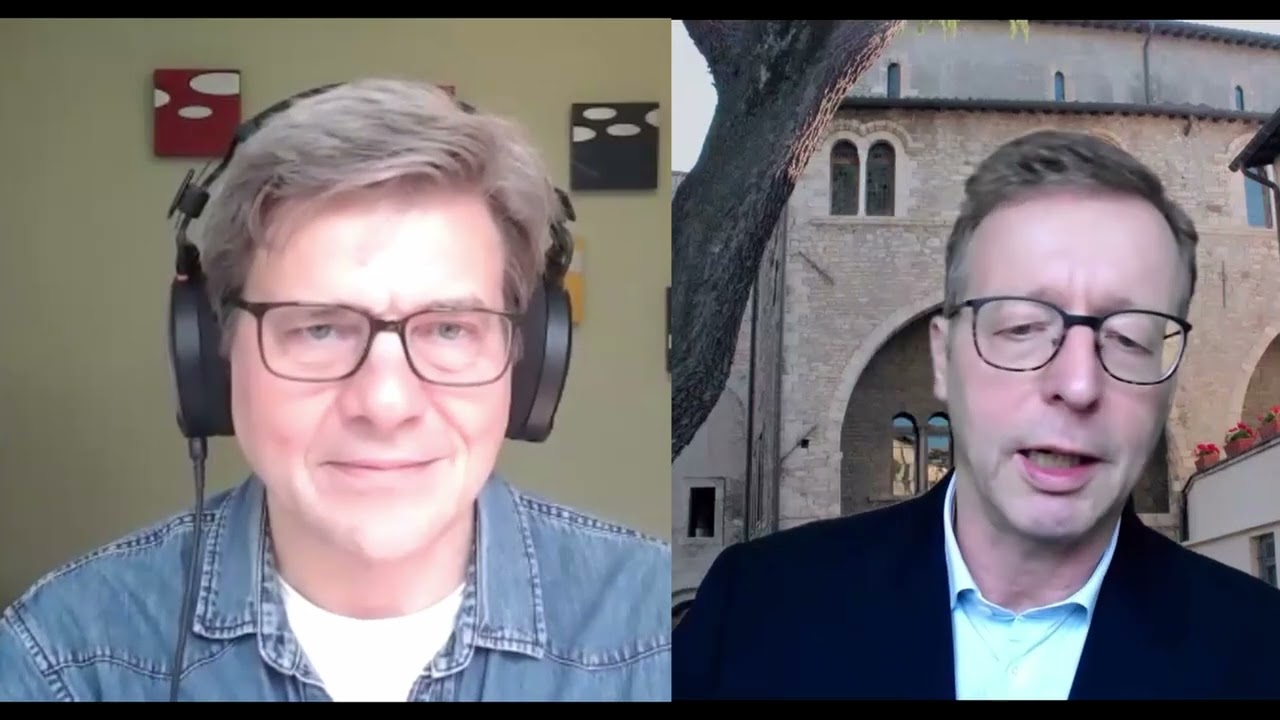
#35 Das Attentat von Anagni
99 mal Geschichte
5 déc. 202541:08DE