
Building a Software Factory that actually works (Full Course)
Get Your Complete Financial OS at https://startup-ideas-pod.link/brex_SIP I welcome Ras Mic back to the pod to explain the phrase "software factory." Mic shares his screen and walks through the exact system that he runs today. His factory has four steps: isolate, build, prove, and ship. He keeps the whole system in five or six markdown files, so it works with any model and any harness. By the end of this episode, you can boot up your own factory, run many agents in parallel, and trust the code that comes back. Create your own Software Factory: https://startup-ideas-pod.link/ras-software-factory Timestamps 00:00 – Intro 02:17 – Software Factory Definition 03:44 – Why the Software Factory Matters 05:23 – Step 1: Isolate With Git Work Trees 11:34 – Step 2: Build With the Code Structure Skill 14:48 – Step 3: Prove With Evidence-Driven Testing 22:25 – Step 4: Ship With Grep Loop and Greptile 26:52 – The Physical Factory Analogy 29:21 – A Software Factory Is Markdown Files 30:02 – Closing Thoughts Key Points • A software factory is a workflow of skills and domain knowledge, so it runs with any model and any harness. • Isolate: every feature starts in a fresh git work tree branched from origin main, so each agent keeps its own station. • Build: a code structure skill makes the agent write service layer code that a human developer can read. • Prove: the agent records a before state and an after state as video, screenshots, or numbers. • Ship: Greptile scores the PR, and the agent loops back to build until it earns five out of five. • Mic runs up to 15 features in parallel and reviews the visual proof instead of the raw code. Numbered Section Summaries 1. What a Software Factory Means Ras defines the term as a workflow, a set of skills, and domain knowledge, packed into markdown files. The word "factory" points to structure, speed, and a conveyor belt that keeps quality high. He is clear that a software factory is a method rather than a product you buy. 2. Why the Factory Matters Now Model intelligence keeps rising, and Ras names GPT-6 Astra as his workhorse and the model with the lowest hallucination rate. A factory lets you use that intelligence in a systematic way, instead of typing back and forth with a chat window. He offers his own skills for free, and he asks people to understand the process first and then adapt it. 3. The Agents.md File as the Master Instruction The agents.md file is a single markdown document that goes into the agent chat ahead of every message. Ras says most people fill it with facts the agent already reads from the code base. He fills his with a workflow instead, because the workflow is the part the agent lacks. 4. Step 1: Isolate A skill called "new feature" starts each task in a fresh git work tree branched from origin main. A work tree acts like a copy of the app, and the agent merges it back later. This keeps two agents apart, so one agent leaves the other agent's files alone. Michael shows four terminal tabs running four features on the same app. 5. Step 2: Build The code structure skill tells the agent to write in a service layer architecture. Models get the job done, and they often get it done in a sloppy way, so the skill supplies the guideline. The result stays readable for a hired developer, for Michael, and for any fresh agent that opens the code base later. 6. Step 3: Prove Two skills handle proof: evidence-driven testing and before and after. The agent records the broken state, does the work, and records the working state, then embeds both in the PR. When the after shot shows a gap, the agent sends itself back to the build step on its own. For work with an invisible surface, such as performance, the agent supplies numbers: one page went from 815 milliseconds to about 61. 7. Step 4: Ship The grep loop skill sends the PR to Greptile, a third-party code review agent, and Greptile returns feedback plus a confidence score. A three out of five sends the agent back through build, prove, and ship. Ras steps in at five out of five and clicks merge. He mentions Code Rabbit and Macroscope as alternatives. 8. The Factory Analogy and the Case for Code Review I map the four steps onto a real factory: a custom order gets its own station, the assembly line builds it, quality control tests it, and shipping sends it out the door. Ras agrees, and he says he may rename his skills to match. The #1 tool to find startup ideas/trends - https://www.ideabrowser.com LCA helps Fortune 500s and fast-growing startups build their future - from Warner Music to Fortnite to Dropbox. We turn 'what if' into reality with AI, apps, and next-gen products https://latecheckout.agency/ FIND ME ON SOCIAL X/Twitter: https://twitter.com/gregisenberg Instagram: https://instagram.com/gregisenberg/ LinkedIn: https://www.linkedin.com/in/gisenberg/ FIND MIC ON SOCIAL X/Twitter: https://x.com/Rasmic Youtube: https://www.youtube.com/@rasmic
Leggi video · Trascrizione e analisi
Questo episodio ha una trascrizione completa e analisi AI
Account gratuito · nessuna carta necessaria · 150 crediti all'iscrizione, sufficienti per sbloccare questo episodio
- 📄 Trascrizione completa con timestamp
- ✨ Riepilogo AI, parole chiave e mappa mentale
- 💡 Conclusioni e citazioni chiave
- Parlante 1
- Parlante 2
- Parlante 1
- Parlante 2
Cronologia dell'episodio
Introduction to software factories and why the concept is going viral as a way to ship quality software with AI agents.
- A software factory uses AI agents to ship software that isn't sloppy, modeled on an assembly line where you build software instead of physical products.
- The dream is creating a factory that builds valuable software and multiple revenue-generating apps that add value to people's lives.
- The episode is sponsored by Brex, which offers high-limit cards, banking, and AI that handles back-office busy work like expense reports.
Ross Mike defines what a software factory actually is and why it matters.
- A software factory is completely harness and model agnostic, so it doesn't matter which model or harness you use because it's about workflow, skills, and domain knowledge.
- The goal is to maximize the model's capability at each step of development to get the greatest output while moving fast without losing quality.
- It matters because intelligence keeps increasing with models like GPT-6 Astra, and a factory lets you systemize these models efficiently instead of just typing back and forth.
Step one of the workflow: the isolate skill using git work trees.
- Every new feature starts in a fresh git work tree branched from origin main so agents can work in parallel without conflicts, and you should never build on main.
- A work tree is a copy of the app, like copying a block of text into a new document, working on it, and merging it back into the original.
- Most agent disasters where files get deleted or overwritten happen because people run multiple features on the same branch, and isolate prevents agents from overstepping each other.
- Ross demonstrates four tabs of parallel work on the same app, including an email client, a Linux environment, and a landing page update.
Concetti chiave
- software factory— The central concept of the episode — a workflow system that uses AI agents to ship quality software like an assembly line.
- agents.md file— The markdown file injected into every agent chat that dictates workflow and behavior, forming the backbone of the factory.
- isolate step— The first workflow step where each feature starts in a fresh git work tree to prevent agents from conflicting with each other.
Citazioni rilevanti
most people's agent.md file is useless because they were telling the agent MD file what the code looked like and already information that's in the codebase that the agent could already know about.
💡— Overturns the common assumption that a detailed agent.md file is always better, revealing that redundant information actually wastes the file's potential.
just because it works doesn't mean it's written well.
💡— Challenges the widespread belief that functional code is sufficient, highlighting that AI-generated code often has hidden quality problems like duplication and dead code.
Conclusioni applicabili
⚙️Workflow Design
A software factory is a repeatable workflow of isolate, build, prove, and ship — not a specific tool or model.
This week, create an agents.md file in your project that outlines these four steps and test it on one small feature.
Isolation via git work trees prevents agents from overwriting each other's work when running in parallel.
Before your next feature, create a new git work tree branch from main and have your agent work only there.
🔍Quality Assurance
Agents can't be trusted to self-report success; they need to prove work with before-and-after evidence.
Require your agent to attach before-and-after screenshots or test results to every pull request this week.
External code review agents like Greptile provide confidence scores that force the agent to iterate until quality standards are met.
Sign up for a code review tool like Greptile or CodeRabbit and integrate it into your PR workflow.
Trascrizione e analisi sono generate dall'AI e possono contenere errori. L'accuratezza dipende dalla qualità dell'audio e dalla chiarezza dei parlanti: in caso di dubbi, l'audio originale resta la fonte attendibile.
Episodi e video pronti da leggere
Episodi podcast

"Bridge Over Troubled Water" — like you've never heard it before | MAS Vocal
TED Talks Daily
13 ago 202610:01EN
The Operator’s Playbook: How Matt Audette Turns Discipline into Scalable Leadership
If You Could with Matt & Taryn
18 feb 202623:31EN
How to Improve Motivation & Overcome Procrastination | Dr. Masud Husain
Huberman Lab
24 ago 20262:20:36EN
vol.01 创业十年 和壹心娱乐创始合伙人们的公开坦白局
天真不天真
19 feb 20241:14:43ZH-Hans
# 65 Der Große Kurfürst - Preußens Anfänge
Wer wir sind und warum das nicht klappte ...
8 lug 20261:08:50DE
Bombe démographique : comment s'y préparer ? - Allo La Martingale #63
La Martingale
2 lug 20261:02:44FR
Video

Doomberg Sees Hundreds of Billions Flowing Into Venezuela’s Oil Sector
In it to Win it
2 set 202629:27EN
Doomberg: Energy, AI, and the Calls Nobody Else Made
AdvisorAnalyst
11 ago 20261:25:04EN
The AI Tsunami is Here & Society Isn't Ready | Dario Amodei x Nikhil Kamath | People by WTF
Nikhil Kamath
24 feb 20261:08:34EN
#27 Die Nibelungen - Wer war Siegfried?
99 mal Geschichte
8 ott 20251:01:13DE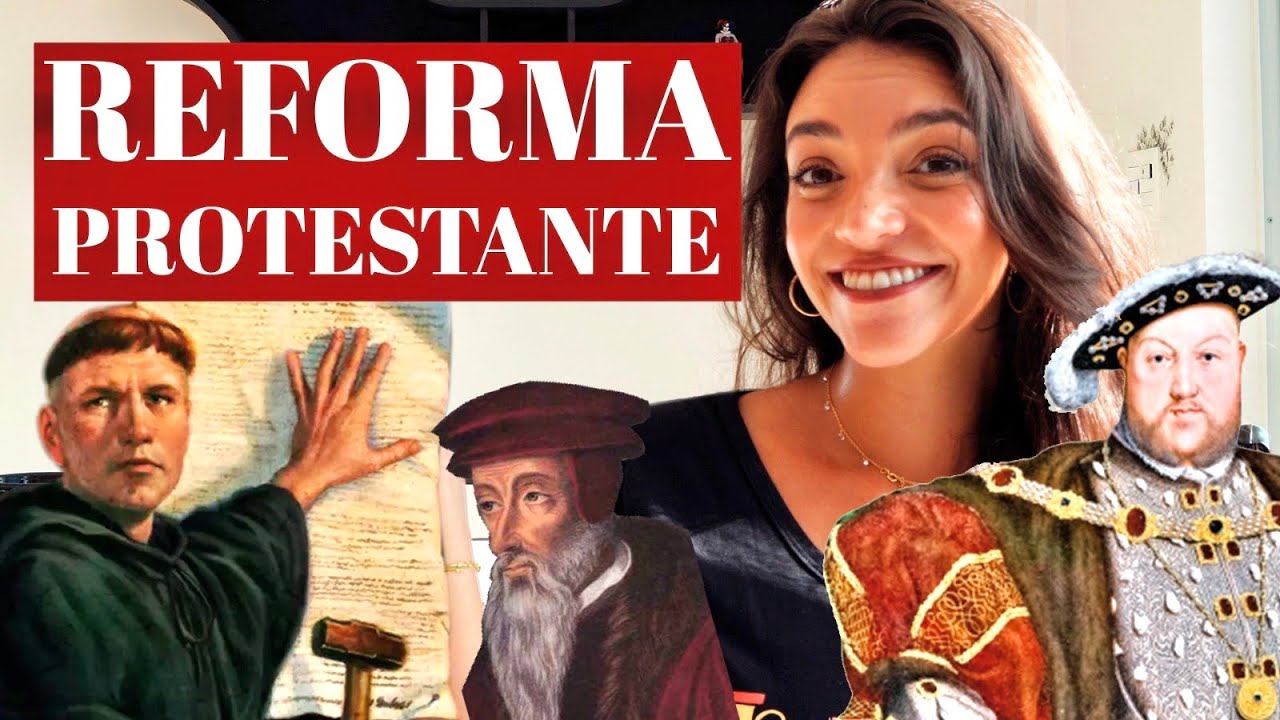
RESUMO: REFORMA PROTESTANTE (Luteranismo, Calvinismo, Anglicanismo e Contrarreforma) Débora Aladim
Débora Aladim
13 feb 202348:51PT